Who we are

A Mumbai shelter for the animals nobody else would take.

Paws and Purpose runs a shelter in Badlapur, on the edge of Mumbai, for rescued cats and dogs — more than 270 of them at the last count. We treat the injured, sterilise across the city, feed on the street, and find homes. Rescuing since 2021, and a shelter since 2022.

Our story

It started with one animal and never stopped.

In 2021, one animal needed help and there was nobody to hand it to. So we did it ourselves. We were not an organisation then, we were just people who could not walk past — and that is still the whole of our qualification for doing this.

One animal became two, and two became a routine of vet visits, medicines and night calls. In 2022 we became Paws and Purpose, and the animals came to live with us in Badlapur instead of us driving across the city to feed them. The house filled up. It has never really emptied since.

What we do has not changed from that first day. We take the animals other people will not: the injured, the ones written off, the ones with a bandage instead of an eye, the ones whose owners decided they were too much. They get a bed, a vet, food, and as much time as they need. That is the part we refuse to compromise on — no deadlines, no deciding who is worth the money.

Paws and Purpose is owned by four people — Rutuja Jadhav, Abhidnya Bhave, Megha Dadhe and Sharmishtha Raut. Rutuja runs the shelter day to day: her number is the one on every rescue appeal, and she is usually the person who answers.

More than 200 animals have been rescued, and more than 200 have gone home, and we still cry over every single one that does not make it. That is not a weakness in the system. That is the system.
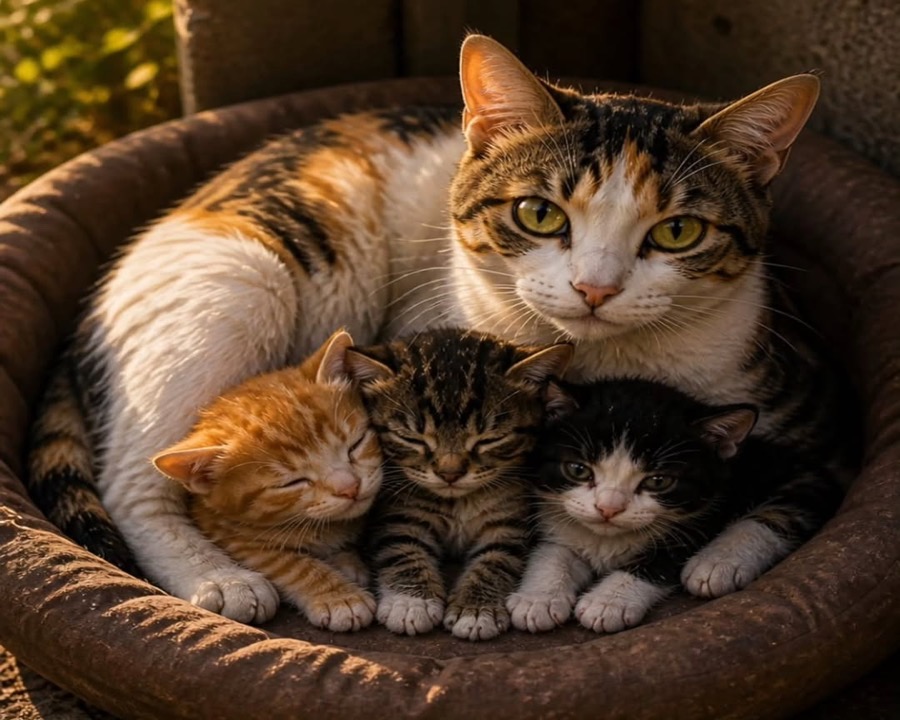
A mother cat with her kittens in a basket at the shelter

Mission

We don't give up on our babies. Ever.

To take in the animals nobody else will take, treat them properly, and keep looking for the home that keeps them.

That is the whole method. It is why we will accept a dog with a misaligned jaw who cannot eat, a cat who has lost an eye, and a stray with a maggot wound — the cases that arrive when everyone else has said no.

Vision

Fewer animals on the street, treated better.

Sterilisation is how that happens. Every cat we sterilise is a litter that will not be born into a life on the street, and every animal we treat is one fewer injury being ignored by everyone who walks past.

In our own words: sterilization is not cruelty — it's compassion.

What we do

Four programmes, one roof.

1. Rescue & medical treatment

We take in injured, sick and abandoned animals from across Mumbai — road accidents, open wounds, infections, malnourishment, and animals whose owners have moved on. Serious cases go to our veterinary partner; the rest are treated at the shelter.

Recent cases: a dog hit by a car in Chembur whose jaw was misaligned so badly he could not eat; a cat whose eye had to be removed; a dog admitted with a maggot wound.

2. Sterilisation — trap, neuter, release

We run TNR drives across the city. Cats are trapped, sterilised, recovered under supervision and released back to the place they came from, where their feeders can keep an eye on them. We count and publish every drive: 24 cats in one day at Thakarbappa, Kurla East; 16 in a single week.

Our line, unchanged: few births mean healthier animals and a better coexistence for everyone.

3. Street feeding

A daily route for the street animals who depend on it. Feeding is also how we find the injuries — the dog who stops eating is usually the dog who needs a vet, and the feeder who notices is usually the first person to tell us.

In-kind support for this is always welcome: food, medicines, blankets and newspaper.

4. Adoption & awareness

We look for homes for the animals who are ready, and we follow up afterwards. Leo was returned to his original family — our first success story. Others have been treated, cleared and adopted out to new ones.

Ask about adopting · Read the case studies

No criteria

We are here to help.

There is no form to qualify for our help, no waiting list and no area we will not drive to. If an animal in Mumbai needs someone, we would rather be the ones who said yes.

  • Anywhere in Mumbai. Roadside, colony, building compound, market — we come.
  • Any time. Day or night, all year. Our phones are on.
  • No criteria. We do not decide an animal is too old, too far gone or not worth the money.
  • No charge, ever. Nobody pays us for taking an animal in, and nobody is turned away for not being able to pay.
  • If we truly cannot reach, we will say so immediately rather than leave you waiting on a maybe.

How we work

The part that separates a shelter from a page of photos.

What actually happens to an animal from the phone call to the front door of a new home.

Rescue response

  1. You call or WhatsApp us with the location, what is wrong, and a photo if you can take one.
  2. Whoever is in the worst state comes first. That is the only order we work in.
  3. We come to the animal — anywhere in Mumbai, at any hour.
  4. Straight to the shelter, or straight to the vet if it is serious.
  5. Intake: examination, first aid, medicines, and a plan for the week ahead.
  6. For funded cases, the bills and the records go to the people who paid for them.

Sterilisation — trap, neuter, release

  1. We find a colony, usually because a feeder has been looking after it for years.
  2. Trapped gently, one cat at a time — no nets, no force, no panic.
  3. Sterilised by Dr. Khandekar, our consulting veterinary surgeon.
  4. Recovery in a clean, quiet space until they are eating and steady on their feet.
  5. Released back where they were trapped, with the feeder told the day it happens.
  6. Counted and published: how many, where, when.

Rehabilitation

Treatment does not end when the wound closes. The middle is the unglamorous part — dressings, tablets, putting weight back on, learning to eat dry food again, learning that hands are safe.

There is no clock on this, and there is no scorecard. An animal stays with us until they are genuinely better, however long that takes. Nobody here is in a hurry to move anyone along.

Adoption & follow-up

An adoption here starts with a chat, not an interrogation. We want to know who lives at home, whether the animal will be indoors, who takes over when you travel, and whether everyone in the house is as keen as you are. Bring your questions too — the good adopters always have a few.

Then the animal goes home. We check in afterwards, more often in the first weeks than later, because that is when the wobbles happen: the cat under the bed, the puppy chewing a slipper, the dog who will not eat on day two. Most of it is normal, and we would rather you asked us than worried quietly.

If a home genuinely does not work out, the animal comes back to us. No conversation needed, no shame in it. That is a promise, and it is why we can promise our animals a home for life.

Our team

The people who run it.

Four owners, consulting vets, and the volunteers who keep turning up.

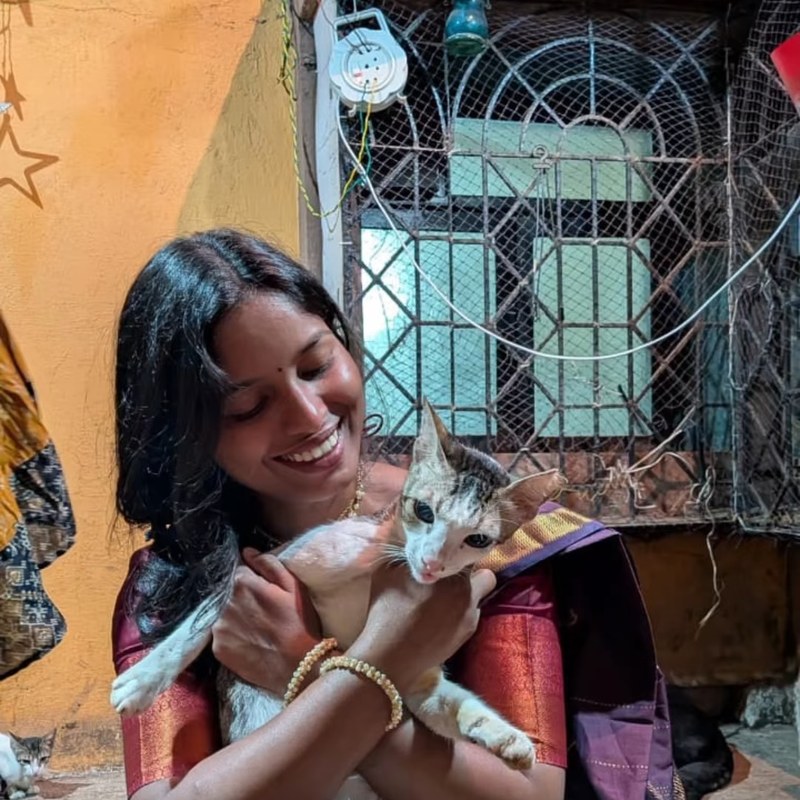
Rutuja Jadhav holding a cat at the shelter

Rutuja Jadhav

Owner · runs the shelter

The person on every rescue appeal. Usually the one who answers, and usually the one who gets in the car.

Abhidnya Bhave

Abhidnya Bhave

Owner

Keeps the shelter running and the animals fed, and is usually the one who notices when somebody is quiet and off their food.

Megha Dadhe

Megha Dadhe

Owner

Handles the adoptions and the questions that come with them, and has a soft spot for the ones nobody else picks.

Sharmishtha Raut

Sharmishtha Raut

Owner

Looks after the medical records, the sterilisation drives and everything that has to be written down.

Our veterinarian

Photo slot: Dr. Khandekar

Dr. Khandekar

Consulting veterinary surgeon

Performs our sterilisations and takes the surgical cases — the broken jaws, the eyes that cannot be saved, the wounds that need more than field first aid.

And the volunteers

Feeders who call us at midnight, drivers who turn up when a dog needs moving, people who spend their Sunday cleaning kennels instead of sitting at home, and the ones who take the photos so the work gets seen.

We would name them all if the list stopped growing. If you want to be on it, tell us what you can do.

Financial transparency

Where your money goes.

Four places, in these proportions. Food and medical care take eight rupees in every ten.

Food40%
Medical40%
Sterilisation10%
Logistics10%

Food is the biggest cost and the least photographed: more than 270 animals eat every day, and the kitchen does not close. Medical is the second — operations, medicines, scans and the vet bills that arrive after a hard case.

Every medical appeal we publish carries the same promise, and it is the only promise on this site that matters: the bills and the treatment records go to the people who funded the case.

Partners & supporters

We don't do this alone.

Listed with permission. Where permission has not been confirmed, the name comes off the page — not the other way around.

Veterinary partner

Parel SPCA

Care and admission for our most critical cases, including animals with severe wounds and infections.

Corporate supporter

The White Collar Pet Spa

Donated beds and toys for the animals at the shelter.

In-kind giving

Amazon Wishlist

Our public list of food and essentials — the easiest way to send something material instead of money.

Permission check before launch. Parel SPCA, The White Collar Pet Spa, Amazon and Blinkit all need a written yes to appear with their name (and, where relevant, their logo). The individual supporters on the home page need the same.

See the shelter for yourself.

Visit, volunteer, adopt or fund a rescue. Message us and we'll tell you honestly what we can fit in.

Donate